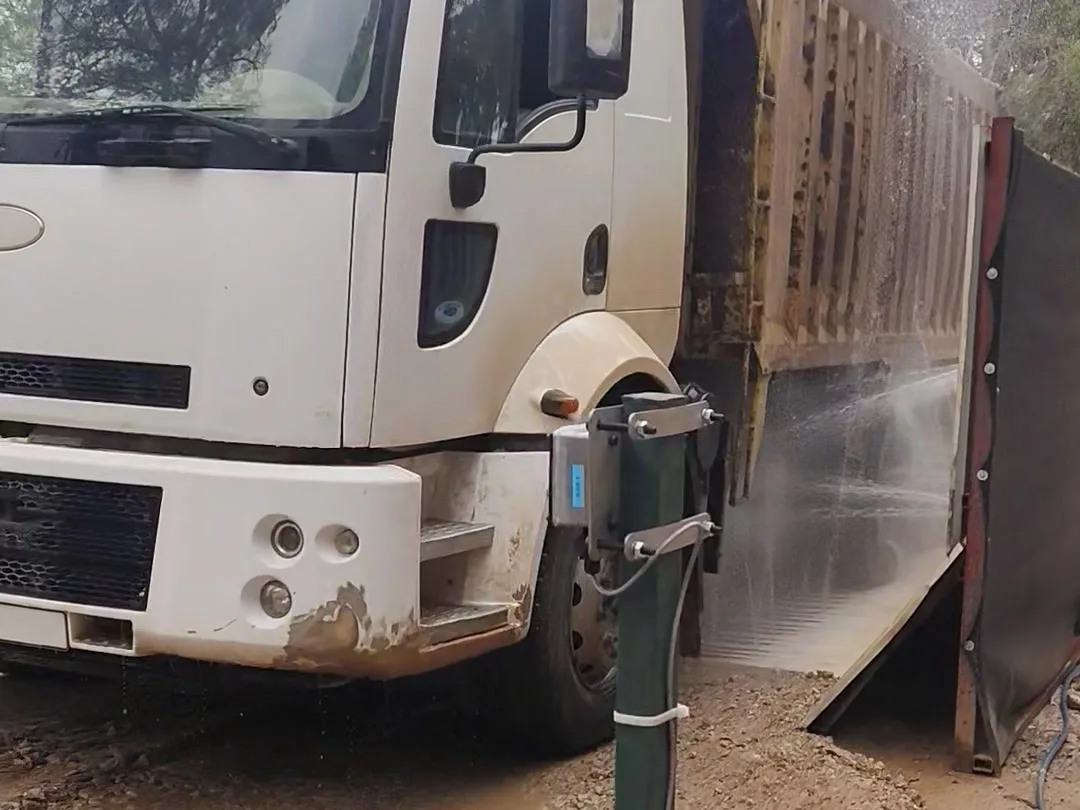
In short: MARG RadarWash is a control system for truck underbody / wheel wash lanes. Four radar sensors, placed in facing pairs at the entry and exit of the lane, detect the truck and start and stop the wash pump (VFD) automatically. The pump starts once the truck has been seen at the entry for 2 seconds and stops 1.5 seconds after it leaves the exit gate. These times are set in the MARG RadarWash Servis app. The wash lane thus runs without an operator.
In the Field: Water Only While a Truck Is in the Lane
The frames below come from a video of an installed, working lane, taken in November 2026. While the truck approaches, the water is off; spraying starts when the truck reaches the entry sensor and continues while it passes.
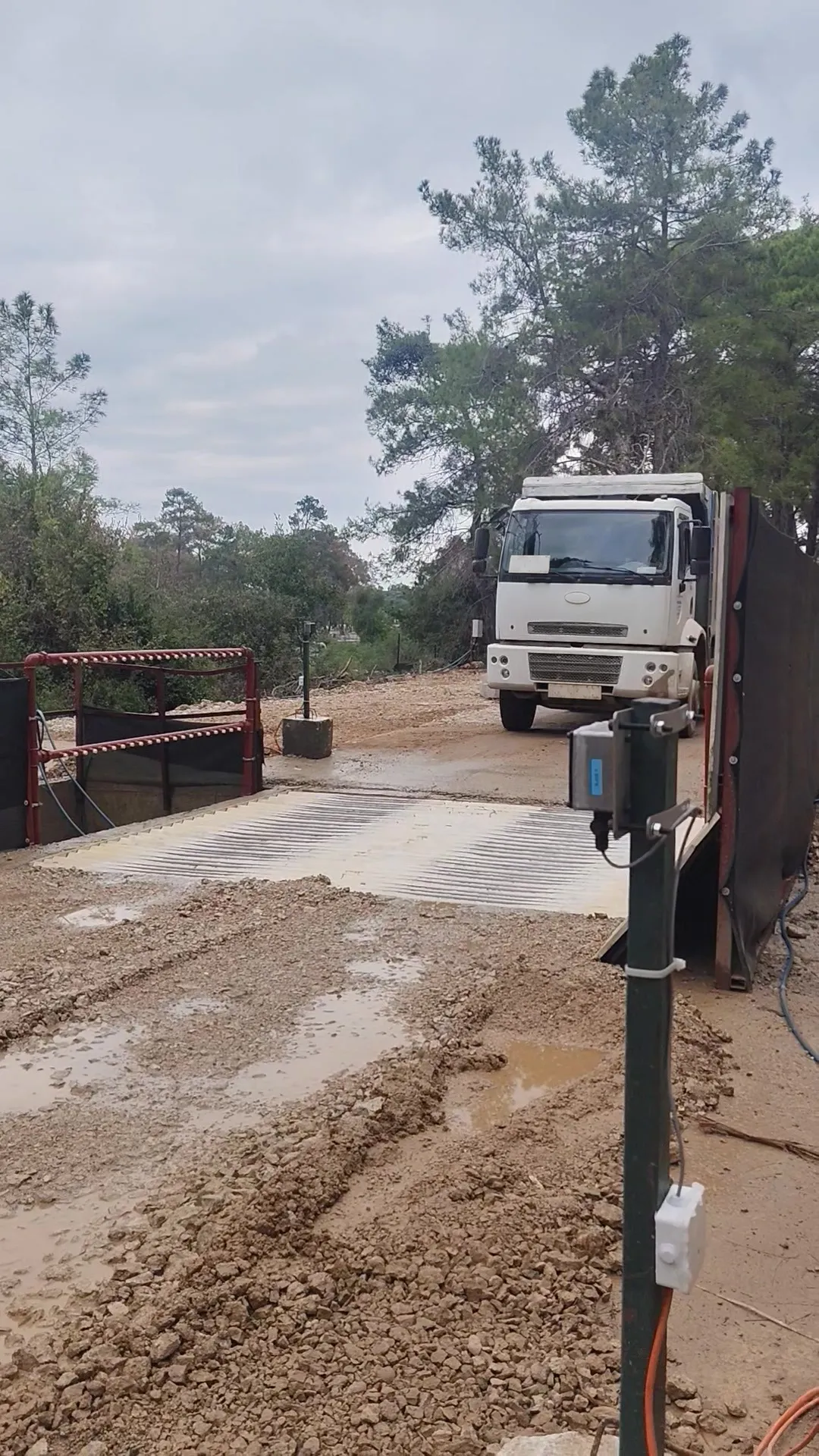
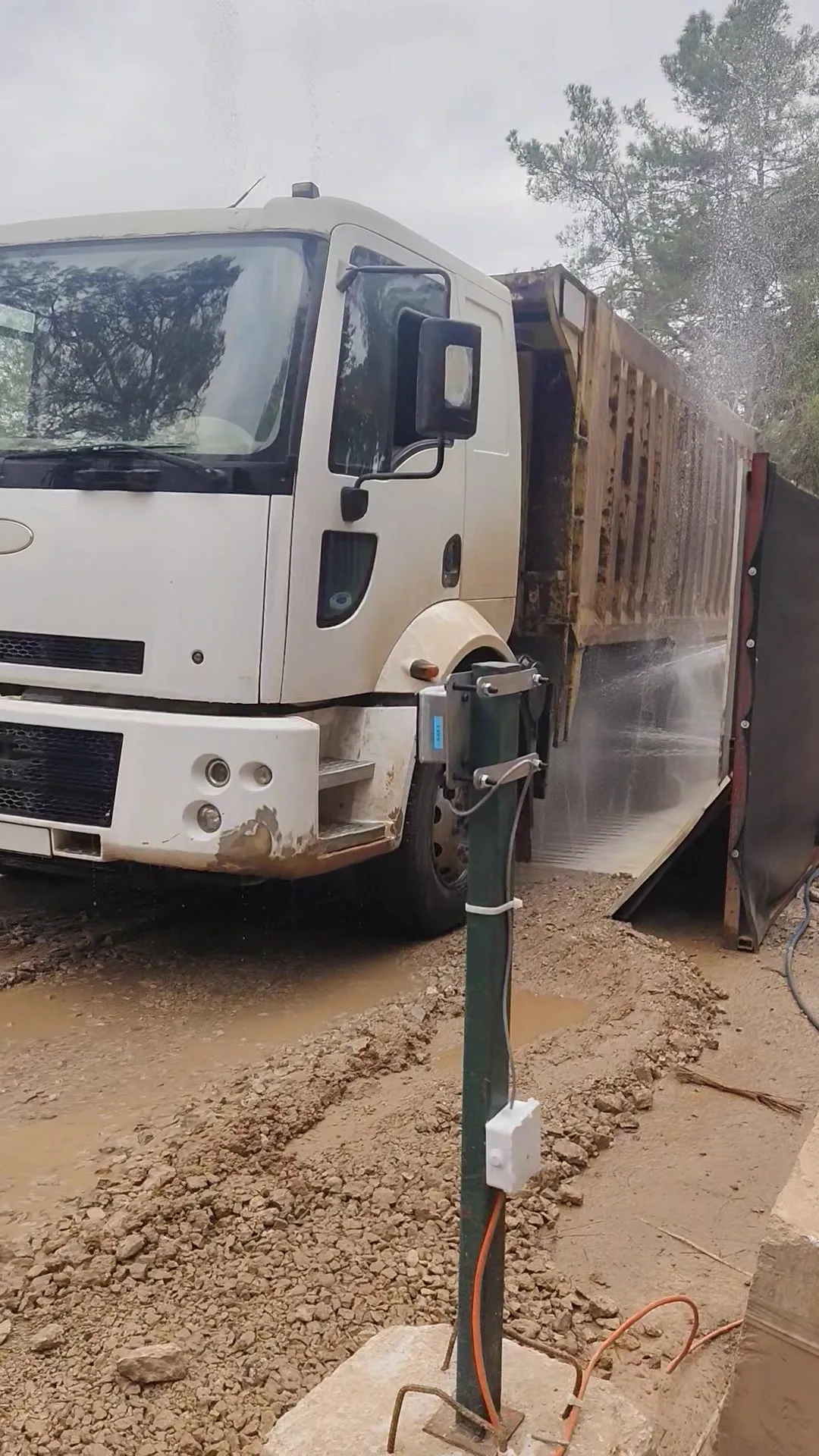
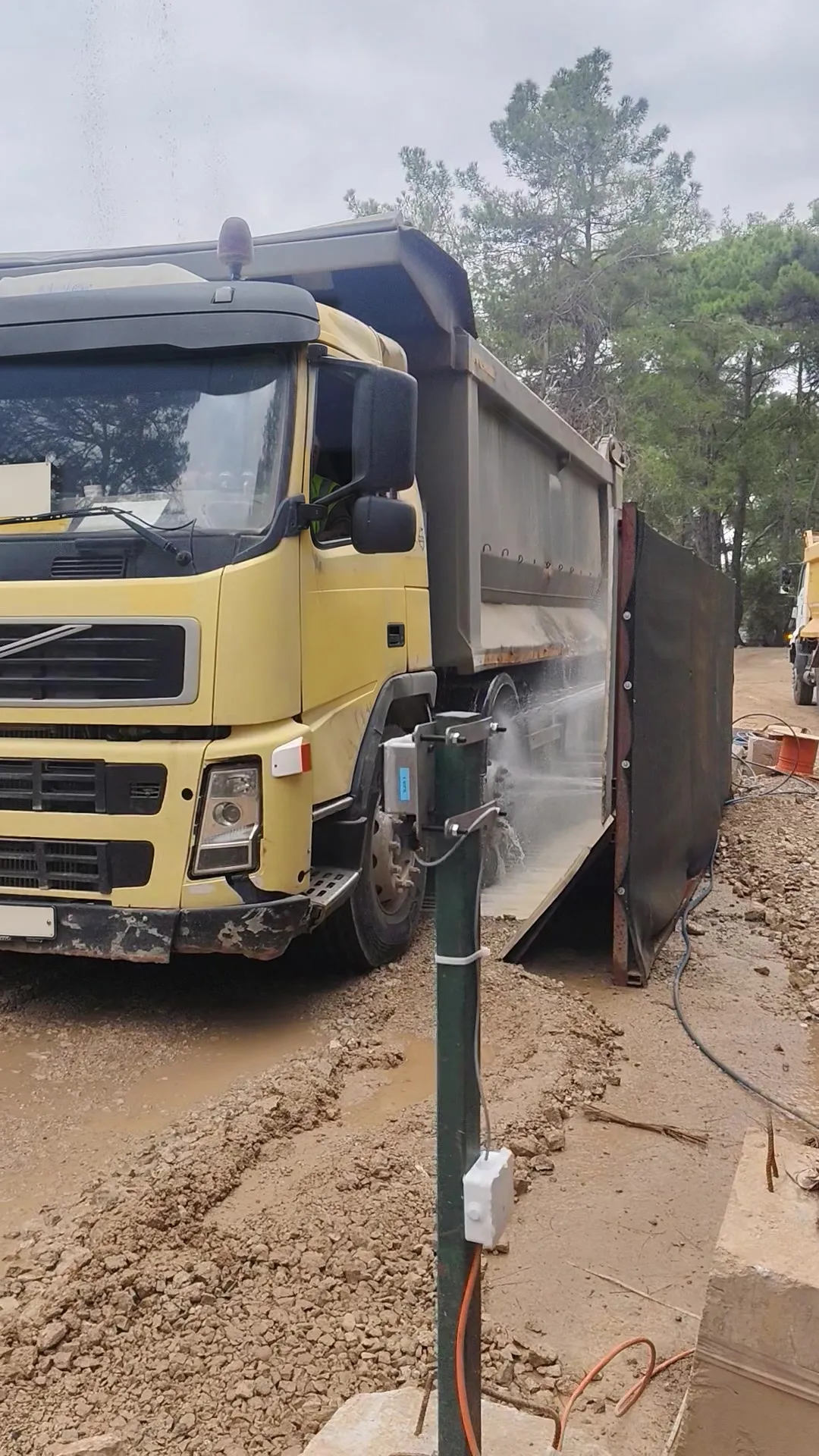
Number plates and company lettering have been made unreadable; the sensors, posts and the site are real photographs.
How It Works
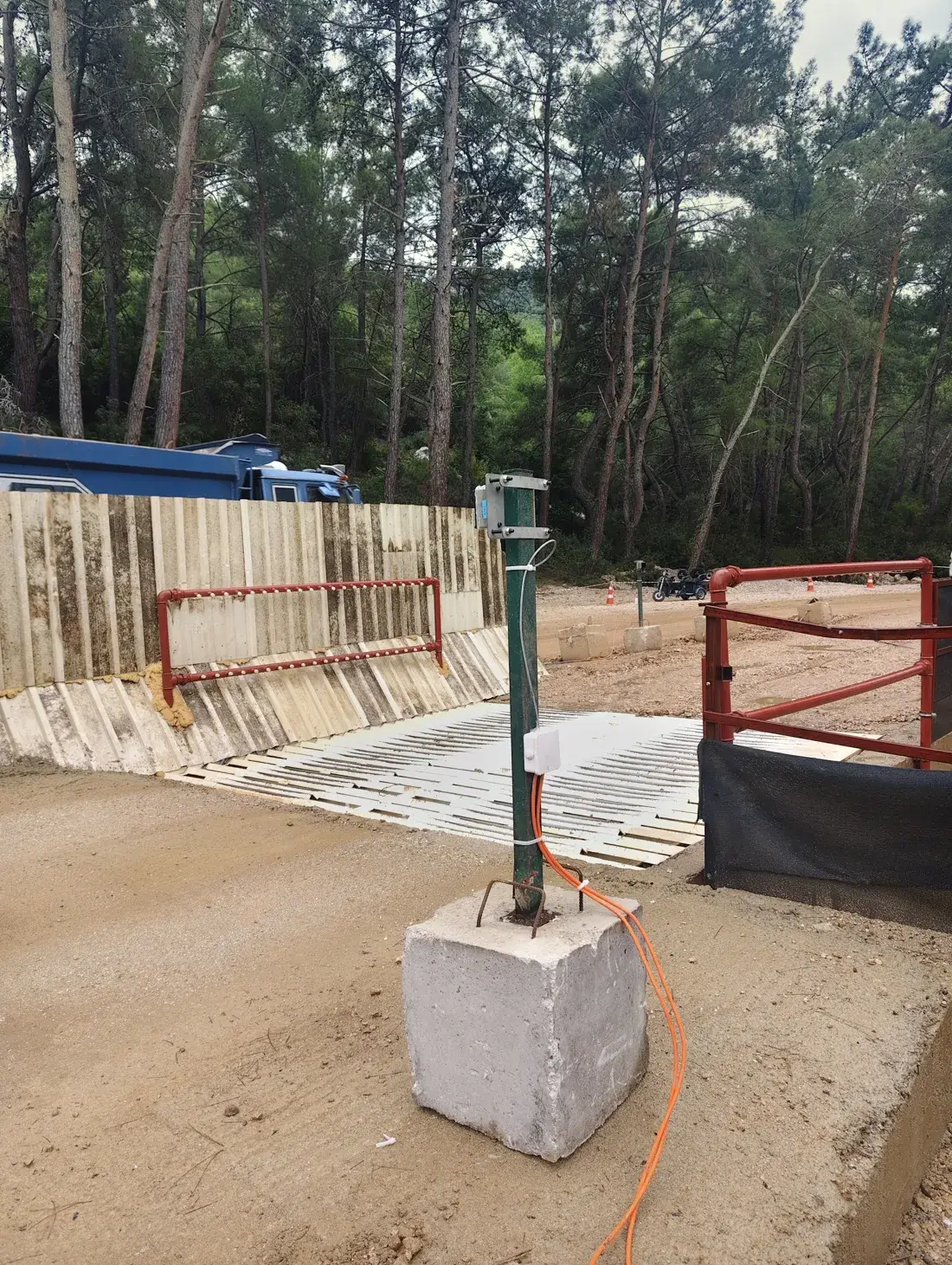
The lane has a "gate" at the entry and one at the exit. At each gate two radar sensors face each other across the lane. The MASTER sensor makes the control decision and runs the VFD of the wash pump.
Confirmation at entry
The pump starts once the truck has been seen at the entry gate for 2 seconds without interruption. Short false detections do not start a wash.
Wash during the pass
The pump keeps running while the truck moves through; a trailer gap at the entry does not interrupt the wash.
Stop at exit
The pump stops when the truck has left the exit gate and the exit has stayed clear for 1.5 seconds.
Safe limits
One wash lasts at most 60 seconds; no wash starts during the first 30 seconds after power-up (default values). No situation locks the system.
Swipe the diagrams sideways to see them in full →
Plan view
Timeline of one pass
Field situations
Not Just Detection: Full Control of the Wash
MARG RadarWash does more than see the truck; it decides when the wash starts, how long it runs, when it ends and when it does not start at all. The wash lane runs without an operator.
Unattended operation
Nobody has to stand by the lane to switch the pump on and off, wait for trucks or watch the time. The system does not lock up or need a manual reset, and it restarts on its own after a power cut.
Same rules for every truck
Every pass follows the same start, stop and time rules; whether a truck gets washed does not depend on a person. A stuck vehicle's wash ends on its own at the upper time limit, and no wash starts for a vehicle coming the wrong way.
Traceability
The board keeps important events in its own memory; while the service app is connected, the live state of the sensors and the pump is shown and passes are logged. The effect of settings is assessed on site with these logs.
System Components
Per lane: four sensor boxes, the cable set between them and the service app. Each box contains a control board and a 24 GHz radar.
System block diagram
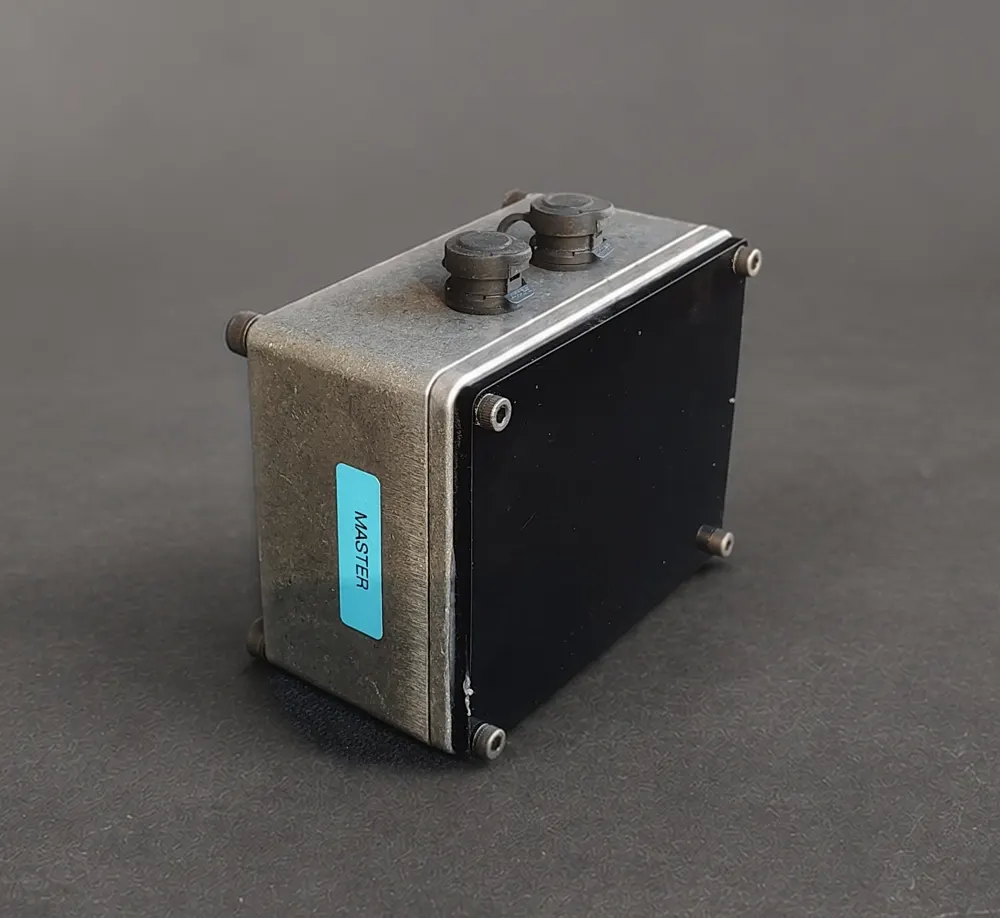
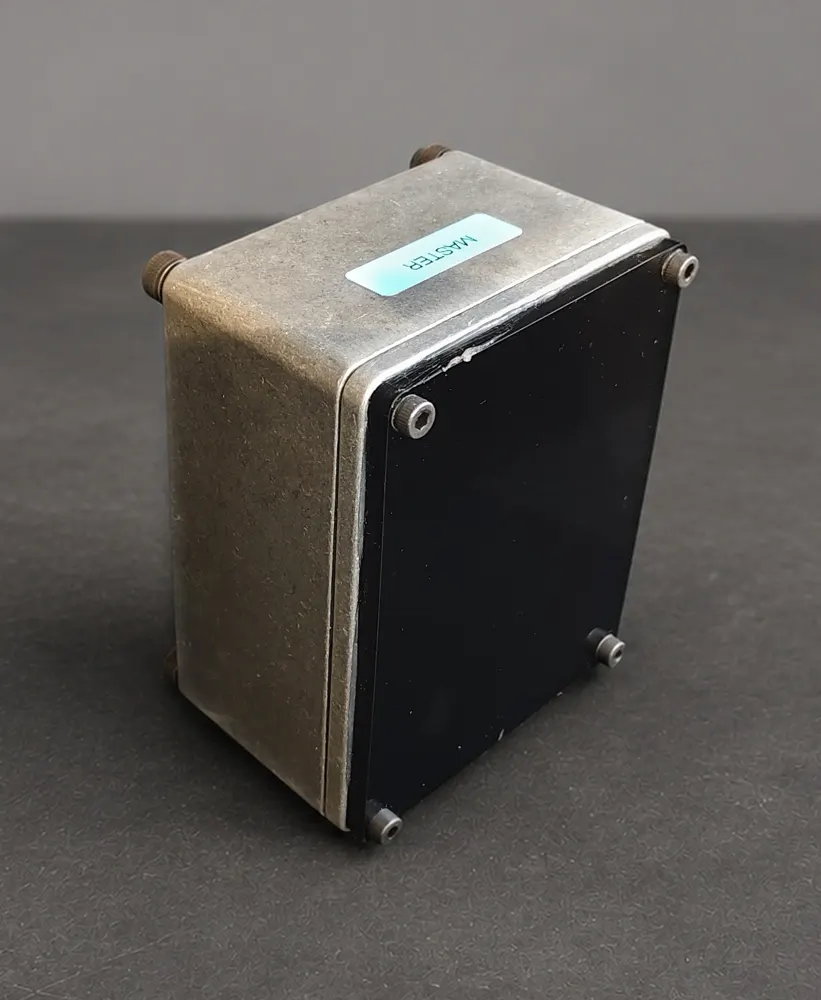
4 radar sensor boxes
1 MASTER + 3 SLAVE. Cast aluminium housing; the radar sits behind a black acrylic window without touching it.
One-cable daisy chain
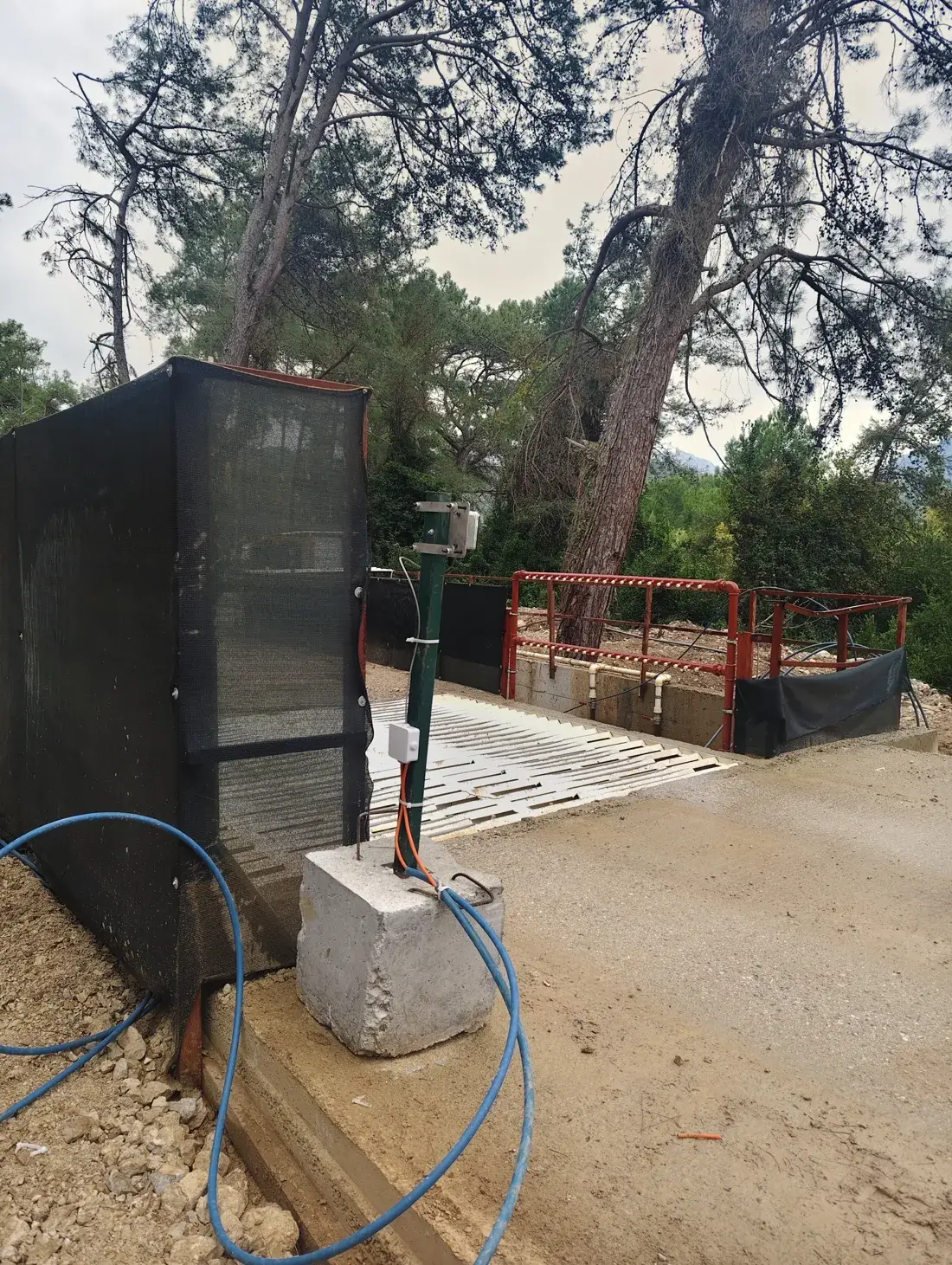
The boxes are linked box to box with one cable that carries both power and CAN communication. Connectors are capped female sockets.
VFD control
The run output of the MASTER is wired to the VFD of the wash pump. The pump only runs while a truck is in the lane.
MARG RadarWash Servis
Android service app: connects to the MASTER over Bluetooth. Details below. App page
Installation
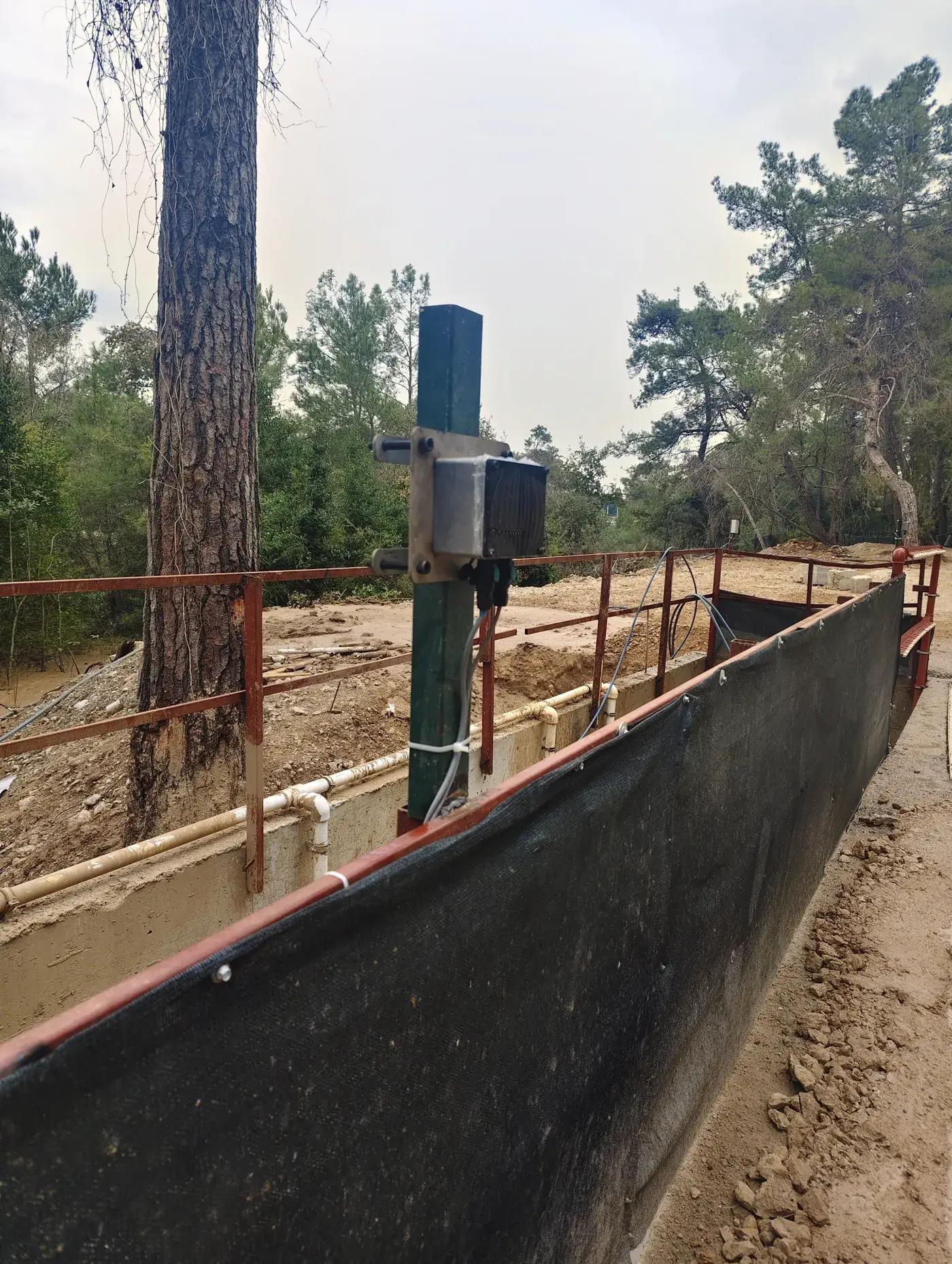
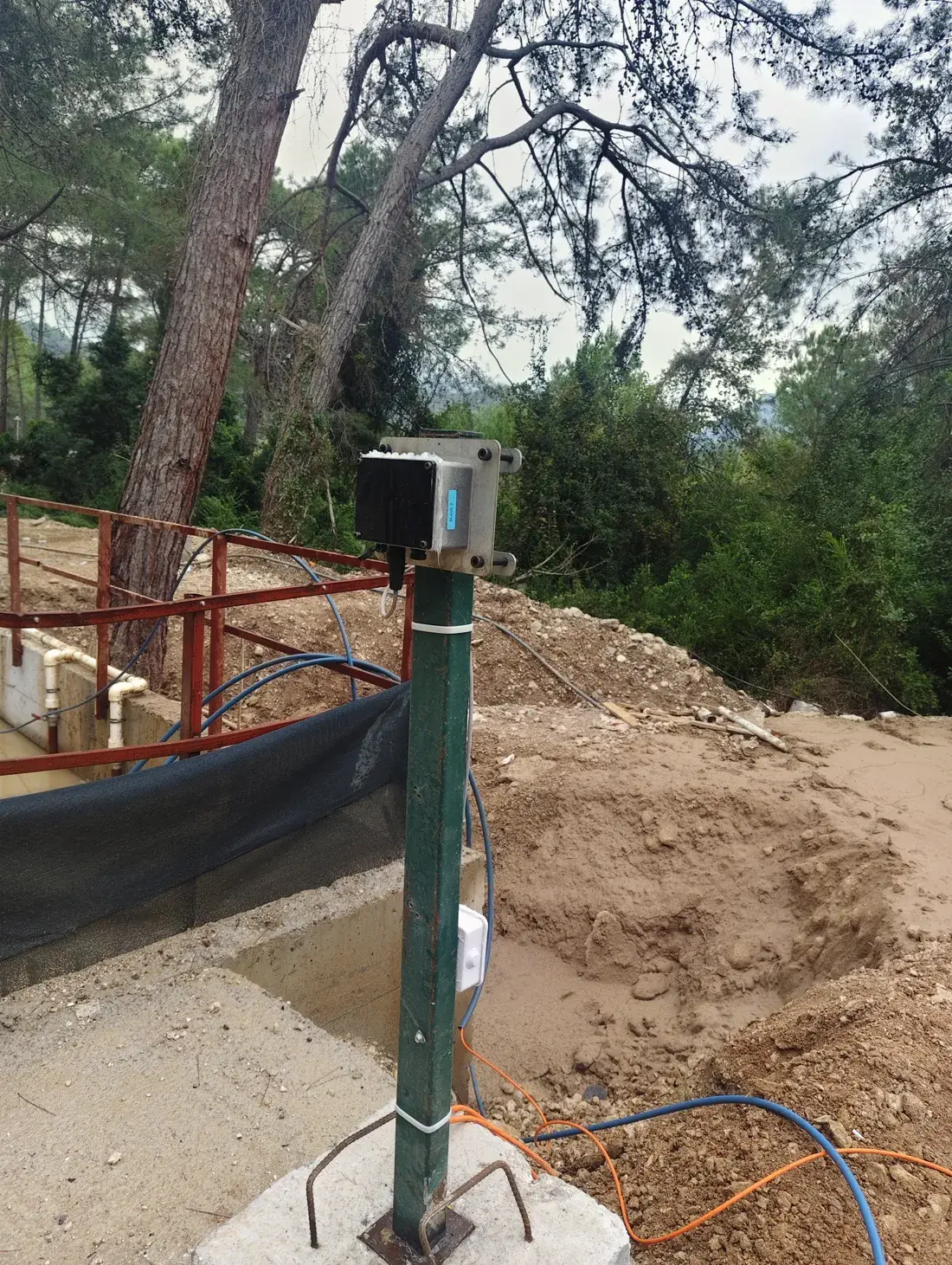
The sensors are fixed with a mounting plate and clamps to the upper part of steel posts at the entry and exit of the lane (on a concrete block or next to the splash wall). The box sits horizontally; the connectors point down and the acrylic window faces the lane. The windows of the two sensors of a gate face each other.
What Does the Service App Do?
MARG RadarWash Servis is the Android service app. It connects to the MASTER sensor over Bluetooth and is used on site for installation and maintenance.
Set the times
Entry confirmation, exit delay and longest wash time are adjusted to the site.
Define the layout
Which sensor stands at which gate and on which side is defined in the app.
Live status
What each of the four sensors sees and the pump state are shown live; sensor alignment is checked with it during installation.
Field logs
While the app is connected, passes are logged and the events stored on the board are read; the effect of setting changes is assessed with these logs.
Why Radar?
Wash lanes usually detect trucks with a treadle in the ground, a pair of photocells or an inductive loop cut into the floor. Radar brings a different approach to this environment:
Reliable in spray
Radar does not use light; water mist, steam, dust and sun affect detection less than they affect optical sensors such as photocells. In the field it works right next to the spray.
No sensor in the ground
The sensors mount on posts beside the lane; no treadle or loop is buried for detection. How the cable between the boxes crosses the lane (conduit, existing channel or overhead) is planned per site.
No lens
The radar measures from inside a closed box, through an acrylic window; there is no optical lens or reflector to align. Thick mud covering the window should be wiped off during routine checks.
No idle pumping
The pump only runs while a truck is in the lane; an empty lane wastes no water or energy.
Detailed comparison of the methods: Photocell or radar?
Summary
| Product | MARG RadarWash — control automation for truck underbody / wheel wash lanes |
|---|---|
| Detection | 24 GHz radar; 4 sensors per lane (2 at entry, 2 at exit, facing pairs) |
| Architecture | 1 MASTER + 3 SLAVE; control board + radar in each box |
| Link between boxes | One-cable daisy chain: power + CAN communication |
| Control output | VFD run output from the MASTER (wash pump) |
| Default times | Entry confirmation 2 s · exit delay 1.5 s · longest wash 60 s · power-up delay 30 s (the first three are set in the app) |
| Setup and monitoring | MARG RadarWash Servis (Android service app), connects to the MASTER over Bluetooth |
| Housing | Cast aluminium box, black acrylic radar window, capped female connectors |
| Mounting | Upper part of a post with mounting plate + clamps; connectors down, window facing the lane |
| Scope | Control automation (sensors, cable set, app). Basin, grating, pump and pipes are not included. |
Who Is It For?
Construction and earthworks exits
Wheel wash lanes that keep trucks from carrying mud onto public roads.
Mines, quarries, concrete plants
Continuously used wash lanes with heavy truck traffic.
Wash system makers and installers
Companies that want to add radar control to their own wash units.
Existing lanes
Lanes started by treadle, photocell or by hand, with a VFD-driven pump.
Will it fit your lane? Tell us the lane width and pump setup and we will look at it together.
Frequently Asked Questions
What is MARG RadarWash?
A control automation for truck underbody and wheel wash lanes. Four radar sensors at the entry and exit of the lane detect the truck; the wash pump starts when the truck is seen at the entry and stops when it leaves the exit. It provides the control, not the wash bay itself (basin, grating, pump, pipes).
Does it also work for chassis and underbody wash lanes?
Yes. MARG RadarWash does not depend on how the washing is done (jets from the grating, side-wall pipes): it detects the truck entering and leaving the lane and runs the pump accordingly. It is used the same way on truck underbody, chassis and wheel wash lanes.
Can I add automatic control to an existing truck wheel wash?
It suits lanes whose pump runs on a VFD (variable frequency drive): the run output of the MASTER sensor is wired to the VFD and the sensors are mounted on posts at the entry and exit of the lane. We check your lane together before quoting.
Does it work in spray, mud and dust?
The sensors use 24 GHz radar. Radar is less affected by water mist, steam, dust and sunlight than optical sensors such as photocells. In the field the sensors work right next to the lane where the wash water is sprayed.
What if a truck stops or gets stuck in the lane?
One wash lasts at most 60 seconds (default). When this limit is reached the pump stops, and the system is ready for the next vehicle once both gates are clear; if the vehicle stays at the entry gate, the wash may start again. No situation locks the system and no manual reset is needed.
Does the gap between tractor and trailer interrupt the wash?
Once a wash has started, a gap at the entry does not stop it; the pump stops when the truck has left the exit gate and the exit has stayed clear for 1.5 seconds. A long gap at the exit gate can end the wash early; the exit delay can then be lengthened in the app.
Does it need an operator?
No. The wash starts on its own when a truck arrives and ends on its own when it leaves. The system does not lock up or need a manual reset; a stuck vehicle's wash ends at the upper time limit, and the system restarts on its own after a power cut. An operator only uses the service app for installation and maintenance.
What about a vehicle coming the wrong way?
With the default setting, no wash starts for a vehicle that is seen first at the exit gate.
How is it configured?
With the MARG RadarWash Servis app on an Android phone, connected to the MASTER sensor over Bluetooth. Entry confirmation, exit delay and longest wash time can be changed; the live sensor status and field logs can be viewed.
What happens after a power cut?
No wash starts during the first 30 seconds after power returns (default); then the system returns to normal operation.
How many sensors are needed?
Four per lane: two at the entry, two at the exit. The two sensors of each gate face each other across the lane. One is the MASTER, three are SLAVEs, all linked by one cable.
What are the price and lead time?
We quote based on lane width, cable runs and your existing pump/VFD setup. Contact us by phone or e-mail.
Quote and Contact
Tell us the width of your lane, the truck traffic and your existing pump / VFD setup; we will assess the fit together and prepare a quote. We reply in English and Turkish.
Phone: +90 554 587 04 54 · E-mail: [email protected]
Address: MARG Mühendislik, Aşağıkaraman Mah. Atatürk Cad. No:67, Konyaaltı, Antalya, Türkiye