In short: A photocell is cheap and simple, but because it works with light it can be affected by spray, mist and mud on the lens. An inductive loop or a treadle is not affected by water but has to be set into the floor. Radar does not use light, is not buried and is less affected by water mist than optical sensors; in return it needs correct placement and setup during installation. The right choice depends on how wet the lane is, whether groundwork is acceptable and the budget.
Five detection methods compared
The table is a general comparison based on how each method works; it is not a site-specific measurement. The same sensor can behave differently depending on its placement and how wet the lane is.
Swipe the table sideways to see it in full →
| Method | How it detects | Mist, steam, sun | Mud and dirt | Groundwork | Watch out for |
|---|---|---|---|---|---|
| Photocell (through-beam or reflective) | The truck breaks a light beam | Can be affected: dense droplets can break or scatter the beam | Mud on the lens or reflector disturbs detection | None for detection | Low cost; needs regular lens cleaning and alignment |
| Inductive loop | A wire loop in the floor senses the metal mass above it | Not affected | Not affected | Cut into or cast into the floor | Hard to place in a grated wash zone; can be damaged by groundwork |
| Treadle / pressure | A wheel presses the treadle | Not affected | Mud and stones can jam the mechanism | Set into the floor | Mechanical wear under heavy traffic |
| Ultrasonic | Measures the echo of a sound wave | Droplets and splash can affect the reading | Dirt on the sensor face affects it | None for detection | Can be sensitive to wind and temperature changes |
| Radar (24 GHz) | Measures the reflection of microwaves | Less affected than optical sensors | Thick mud covering the window should be wiped off periodically | None for detection, mounts on a post; the entry–exit cable crossing is planned per site | Higher unit cost than a photocell; placement and setup are done at installation |
What makes a wash lane hard for sensors?
A truck wash lane is a much harder place for sensors than an ordinary car park entrance:
- Water and mist: as soon as spraying starts, a dense cloud of droplets forms in front of the sensor. Light-based sensors struggle most at exactly that moment — when the system has to decide whether to keep washing.
- Mud: truck wheels and splashing water carry mud onto the sensor face.
- Grating and basin: the floor of the wash zone is mostly grating and a settling basin; burying a sensor is not possible everywhere.
- Heavy traffic: the floor under loaded trucks is hard on mechanical parts and buried cables.
- Trailers and gaps: the gap between tractor and trailer can make a sensor think the truck has left. This is a job for the control logic more than for the sensor.
Which one when?
A photocell may be enough
If the sensor can stand away from the spray zone, the lane stays fairly dry and the lenses can be cleaned regularly.
An inductive loop can be considered
If the lane floor is being re-poured anyway and the loop can sit in solid ground outside the grating and basin.
Radar is a good fit
If the sensor has to stand right next to the spray, cutting the floor is not wanted, or an existing lane is being automated.
A sensor alone is not enough: the control logic
Whatever sensor you choose, reliable automatic washing depends on the control rules. A truck wash control should answer at least these questions:
- Does a short false detection start a wash? (entry confirmation time)
- Does a trailer gap or a slowing truck interrupt the wash? (entry and exit gates evaluated together, exit delay)
- How long does the pump run if a truck stays in the lane? (longest wash time)
- What happens with a vehicle coming the wrong way?
- After a power cut, does the system restart on its own or get stuck?
MARG RadarWash applies these rules with two "gates" at the entry and exit of the lane; see how it works for details.
How MARG RadarWash uses radar
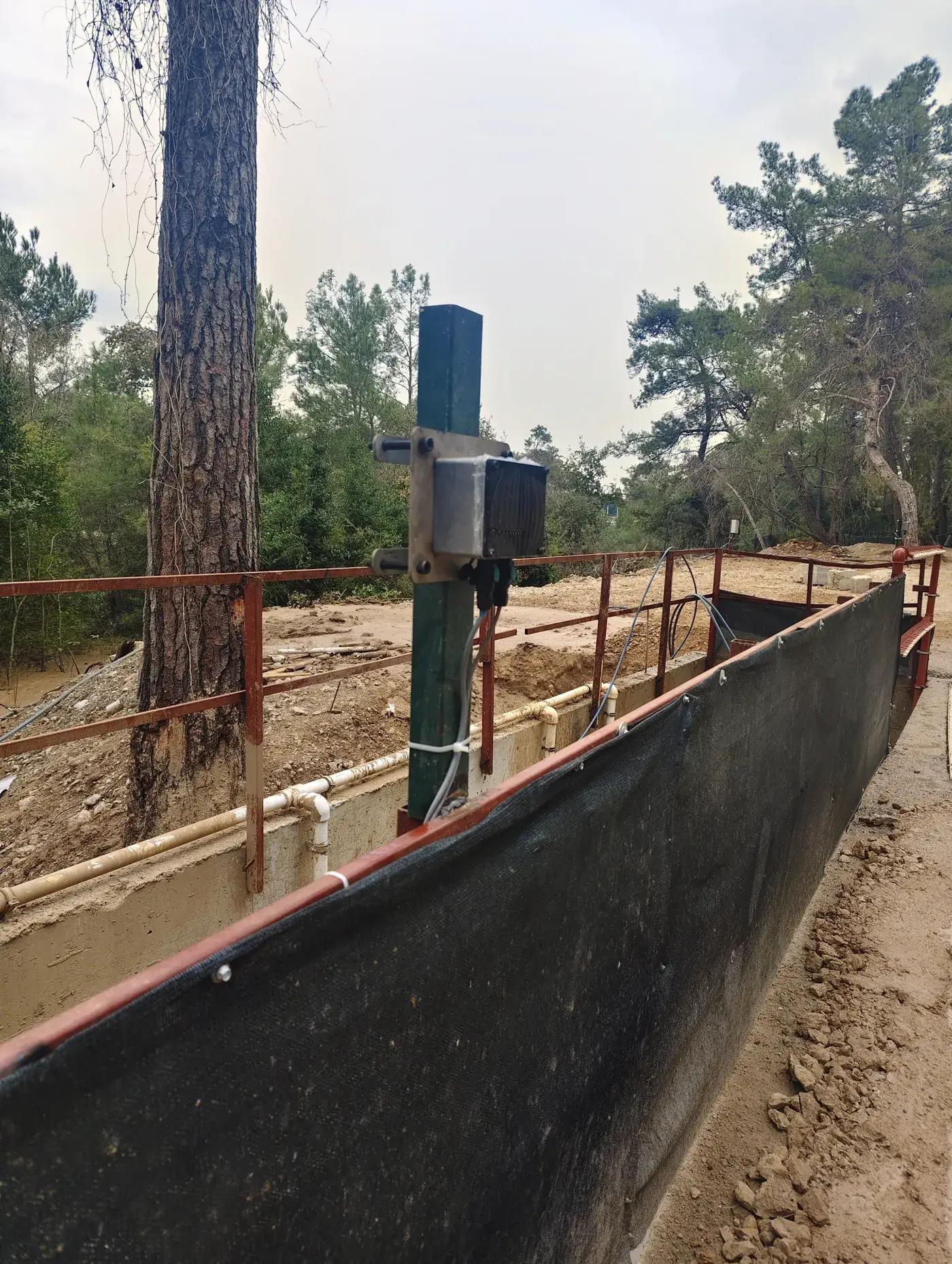
There are four 24 GHz radar sensors per lane: two at the entry, two at the exit. The two sensors of each gate face each other across the lane and what they see is evaluated together. The radar measures from inside a cast aluminium box through a black acrylic window; there is no lens or reflector to align.
In the field the sensors work right next to the lane where the wash water is sprayed. Layout and times are set in the MARG RadarWash Servis app; during installation alignment is checked against the live sensor status.
Frequently Asked Questions
Does a photocell not work on a truck wash?
It can. A photocell does the job if it can be placed away from the spray zone in a fairly dry spot and its lenses are cleaned regularly. Problems usually start when the sensor has to stand right next to the water.
How does radar work in rain and water mist?
Radar uses microwaves, not light; raindrops, water mist, steam and sunlight affect it less than optical sensors. MARG RadarWash sensors work in the field right next to the spray.
Does a radar sensor need maintenance?
There is no lens or reflector to align. Thick mud covering the acrylic window should be wiped off during routine checks.
Can I convert my existing photocell lane to radar?
Yes on lanes whose pump runs on a VFD; the basin and pump stay. See the guide on automating an existing lane.
Is an inductive loop more reliable?
A loop is not affected by water or light, but it has to be set into the floor, which is not always possible in a grated wash zone. It can be a good option if the floor is being renewed anyway.
Let us assess the fit for your lane together.
E-mail: [email protected]