In short: To automate an existing wash lane you add sensors that detect the truck at the entry and exit of the lane, and a control that starts and stops the pump based on that detection. MARG RadarWash does this with four radar sensors: on lanes whose pump runs on a VFD (variable frequency drive), the run output of the MASTER sensor is wired to the VFD; the basin, grating, pump and pipes stay as they are.
What goes wrong with a manually run lane?
Lanes where a person switches the pump on and off, or where it is simply left running, tend to share three problems:
- Trucks leaving unwashed: if the operator is away or late at a busy hour, the truck leaves unwashed and carries mud onto the road.
- Idle pumping: if the pump is left on "just in case", water and energy are wasted on an empty lane.
- Person-dependent results: how well a truck is washed depends on whoever is on duty; no two passes are the same.
Automation takes that decision away from a person and applies the same rule to every truck: start when a truck arrives, stop when it leaves, never get stuck.
Which lanes are suitable?
If most of the points below apply to your lane, moving to radar control is usually straightforward. We confirm the fit together before quoting.
- The wash pump runs on a VFD (variable frequency drive). For pumps switched directly by a contactor, we assess the connection separately during the review.
- There is room for posts on both sides of the lane at the entry and the exit (on a concrete block or next to the splash wall).
- Trucks enter the lane from one end and leave from the other.
- A route for the cable linking the entry and exit sensors can be planned (conduit, existing channel or overhead).
What changes and what stays?
| Stays | Basin, grating, side walls, spray pipes and nozzles, pump, VFD, water circuit |
|---|---|
| Added | 4 radar sensor boxes (1 MASTER + 3 SLAVE), one-cable daisy chain between boxes (power + CAN), run connection from the MASTER to the VFD, Android service app |
| If needed | Posts and mounting plates for the sensors, conduit or channel for the cable crossing the lane |
| Goes away | Switching the pump on and off by hand; the start function of any treadle or photocell |
Plan view
Step by step
- Initial reviewA few photos or a short video of the lane, its width, the pump and VFD details and how the lane is started today are enough to discuss fit and layout.
- Layout planWe fix where the entry and exit gates are, the posts where the two sensors of each gate will face each other, and the cable route between boxes.
- MountingThe sensor boxes are fixed to the upper part of the posts with a mounting plate and clamps; connectors point down, the acrylic window faces the lane.
- Cabling and VFD connectionThe boxes are daisy-chained with one cable. The run output of the MASTER is wired to the VFD of the pump.
- Setup in the appIn MARG RadarWash Servis you define which sensor stands at which gate and on which side; alignment is checked against the live sensor status.
- Trial with trucksStart and stop are watched during real truck passes. Entry confirmation, exit delay and longest wash time are fine-tuned to the site.
How the lane runs afterwards
Starts when a truck arrives
The pump starts once the truck has been seen at the entry gate for 2 seconds (default).
Stops when it leaves
The pump stops when the truck has left the exit gate and the exit has stayed clear for 1.5 seconds.
Never stuck
One wash lasts at most 60 seconds; no wash starts for a vehicle coming the wrong way; after a power cut the system resumes on its own 30 seconds after power returns.
No operator
The service app is only used for installation and maintenance.
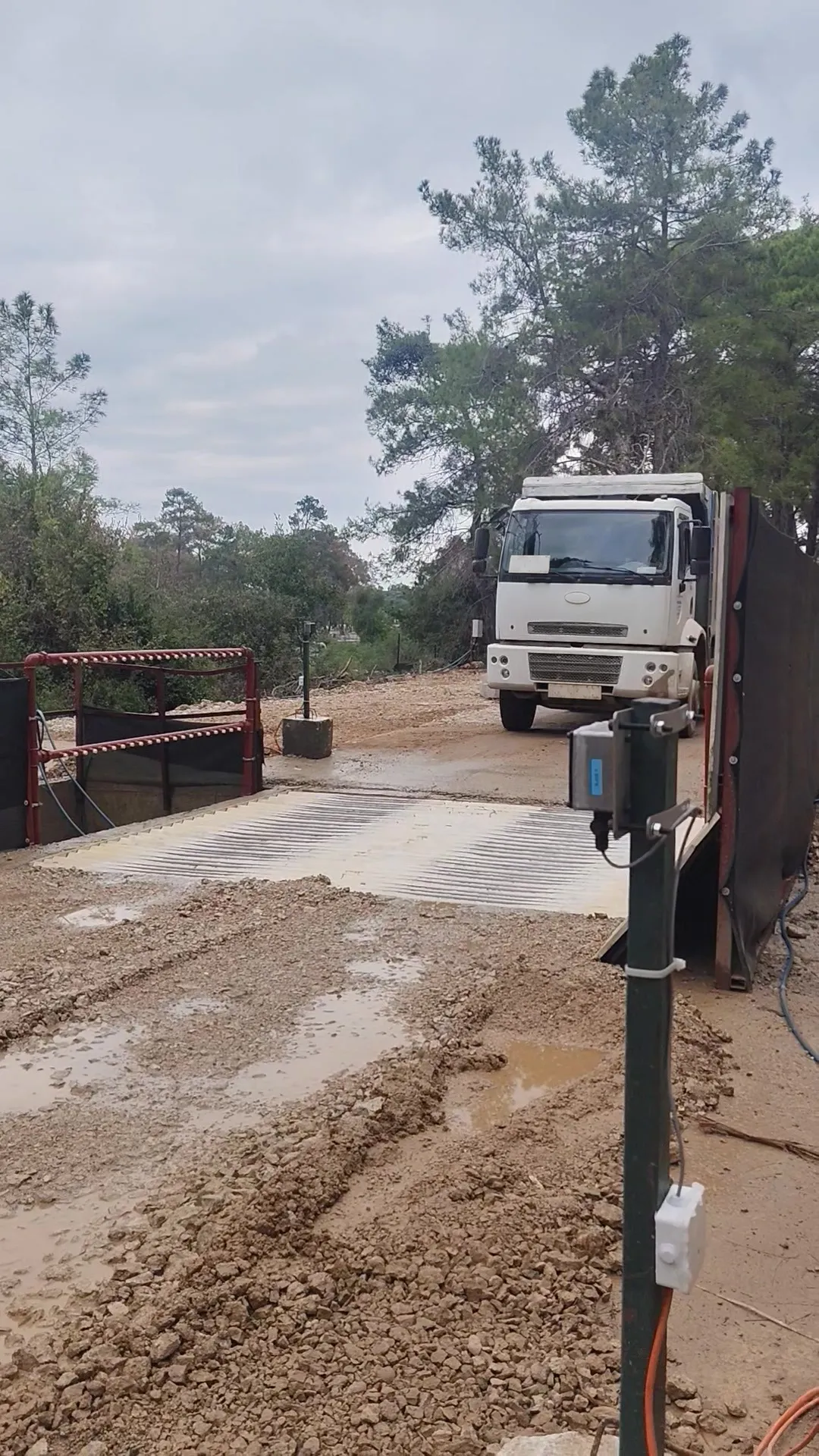
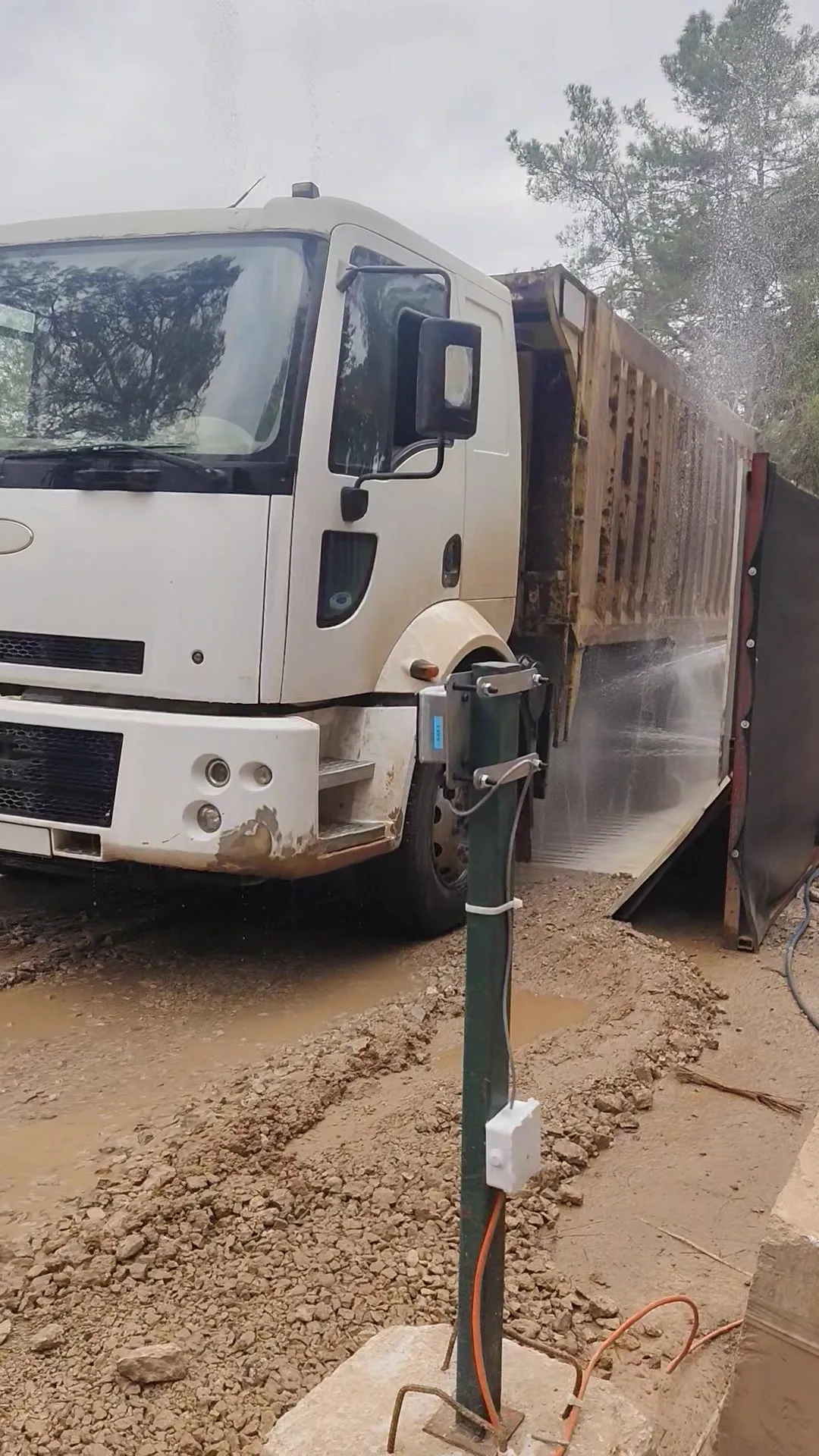
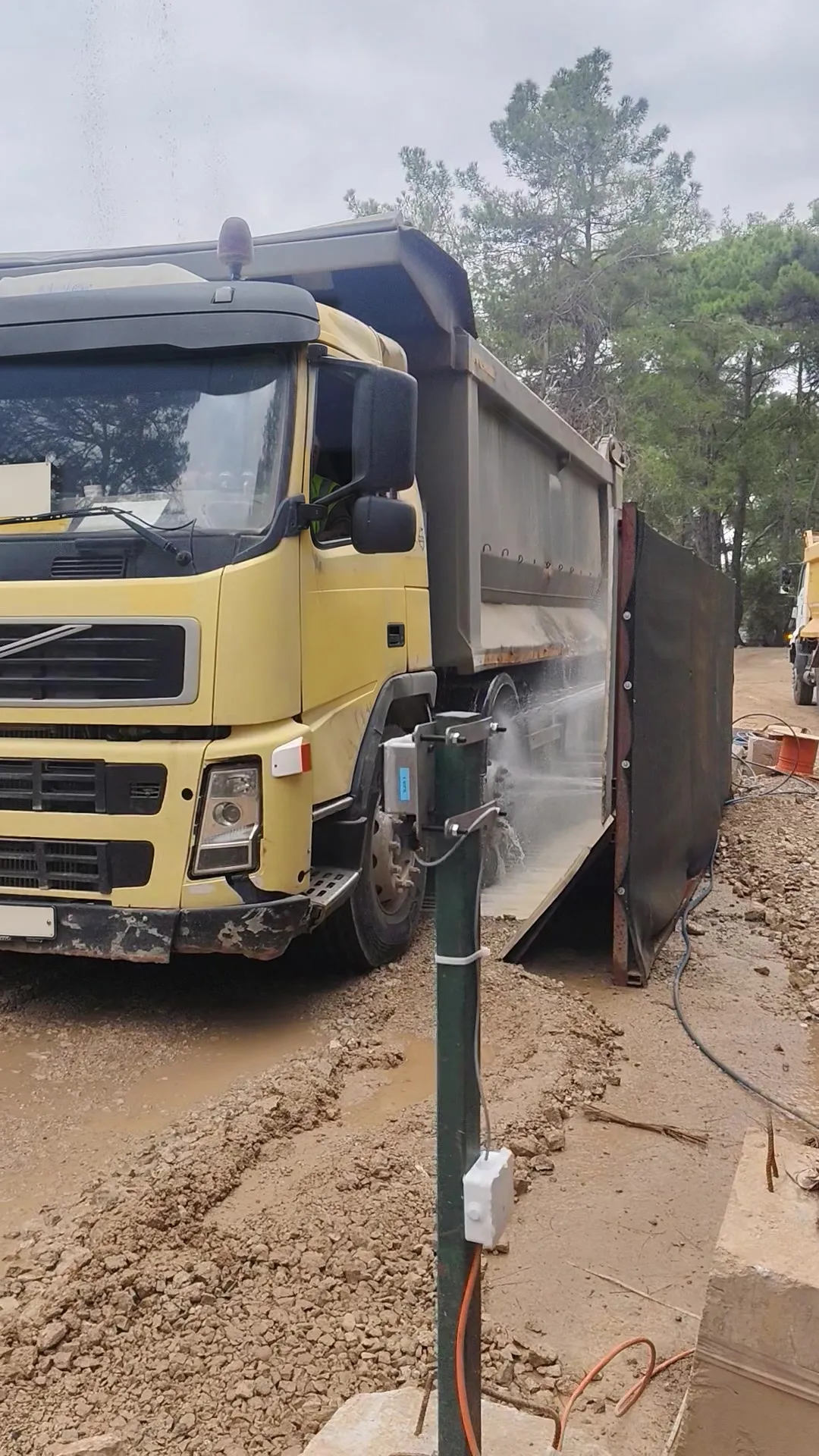
Frames from an installed, working lane; number plates and company lettering made unreadable.
What to send us for the initial review
- One photo (or a short video) of the lane from the entry and one from the exit
- Lane width and approximate length
- Pump power and VFD make/model (a photo of the rating plate is enough)
- How the lane is started today: by hand, treadle, photocell or otherwise
- Approximate cable distance between the control panel and the lane
Frequently Asked Questions
Do I need to replace the basin or the pump?
No. MARG RadarWash is control automation only; the basin, grating, pump and pipes stay as they are. A run connection is made to the VFD of the pump.
My pump has no VFD and is switched by a contactor. Will it work?
The system suits lanes whose pump runs on a VFD. For contactor-switched pumps we assess the connection with you during the initial review.
Does it need digging or cutting into the floor?
No sensor is buried for detection; the sensors mount on posts beside the lane. How the cable linking the entry and exit boxes crosses the lane (conduit, existing channel or overhead) is planned per site.
I use a photocell today. Why change?
A photocell uses light; spray, mist and mud on the lens can affect detection. See the Photocell or radar? guide for the differences.
How is the price set?
We quote based on lane width, cable runs, whether posts are needed and your existing pump/VFD setup.
Let us assess the fit for your lane together.
E-mail: [email protected]